Skip to content
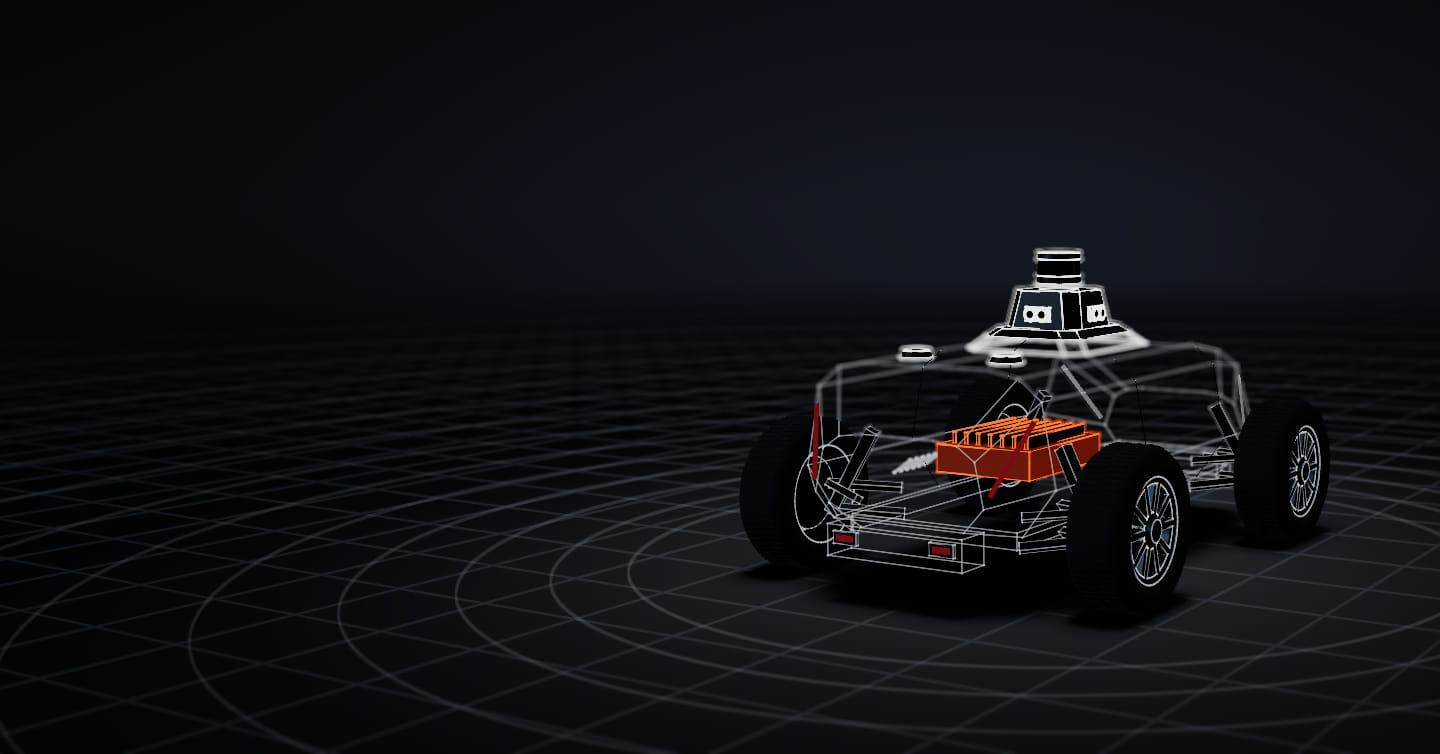
Illustrative model · not to scale

SeaX Drive · for manufacturers

Level 4 autonomy on closed sites for your electric platform

SeaX Drive is the autonomous driving stack that runs our vehicle. We license it to electric platform manufacturers so their vehicles can operate driverless within a defined operational design domain: a closed site, only along the routes on its map.The autonomous driving stack of our vehicle, licensed so your platform can operate driverless on a closed site, only along the routes on its map.

Illustrative model and simulation · not to scale

Integration

One stack, different platforms

It runs on our vehicle and is the basis of the SX-1, the security robot. On your platform it adapts to the sensor set-up and the vehicle interface.

Our vehicle
On a test track and at Teruel AirportReal-world test
SX-1 robot
Industrial electric chassis
Your platform
Electric chassis and actuators

02 / 04 · chassis and actuators

Your platform

Electric chassis with steering, propulsion and braking actuators

  • Steering
  • Propulsion
  • Brake

03 / 04 · on board

SeaX Drive, on board

The LiDAR, the cameras and the GPS work together: they detect what is around and place the vehicle on the site’s 3D map, to the centimetre, without depending on GPS alone. SeaX Drive adapts to different sensor set-ups.

  1. 01Perception and localisation
  2. 02Planning
  3. 03Control

Functional safety · checks all three layers

Safe operation, on the SX-1 robot page

04 / 04 · Integration

What crosses the integration

Sensor data
From the sensors to perception
Vehicle status
From the vehicle to SeaX Drive
Steering, propulsion and braking commands
From control to the actuators
Interface
We agree them with you in the technical assessment
Your platform’s requirements, in the data sheet
Illustrative model and simulation · not to scale

How it drives

From sensor to manoeuvre, on board the vehicle

The software runs on the on-board computer: perception and navigation do not depend on our server.

01 / 04

Perception and localisation

The LiDAR, the cameras and the GPS work together: they detect what is around and place the vehicle on the site’s 3D map, to the centimetre, without depending on GPS alone.

See detection, on the SX-1 robot page

02 / 04

Planning

The global planner sets the route; the local planner adjusts the path to the immediate surroundings.

03 / 04

Control

Follows the planned path and steers around stationary obstacles on its route. It acts on steering, propulsion and braking.

04 / 04

How the system responds to a fault

The system detects faults in real time, with two independent detection paths. It responds to a fault in steps: reduced speed, a controlled stop or an emergency stop.

  1. Normal operation
  2. Fault detected
  3. Safe stop
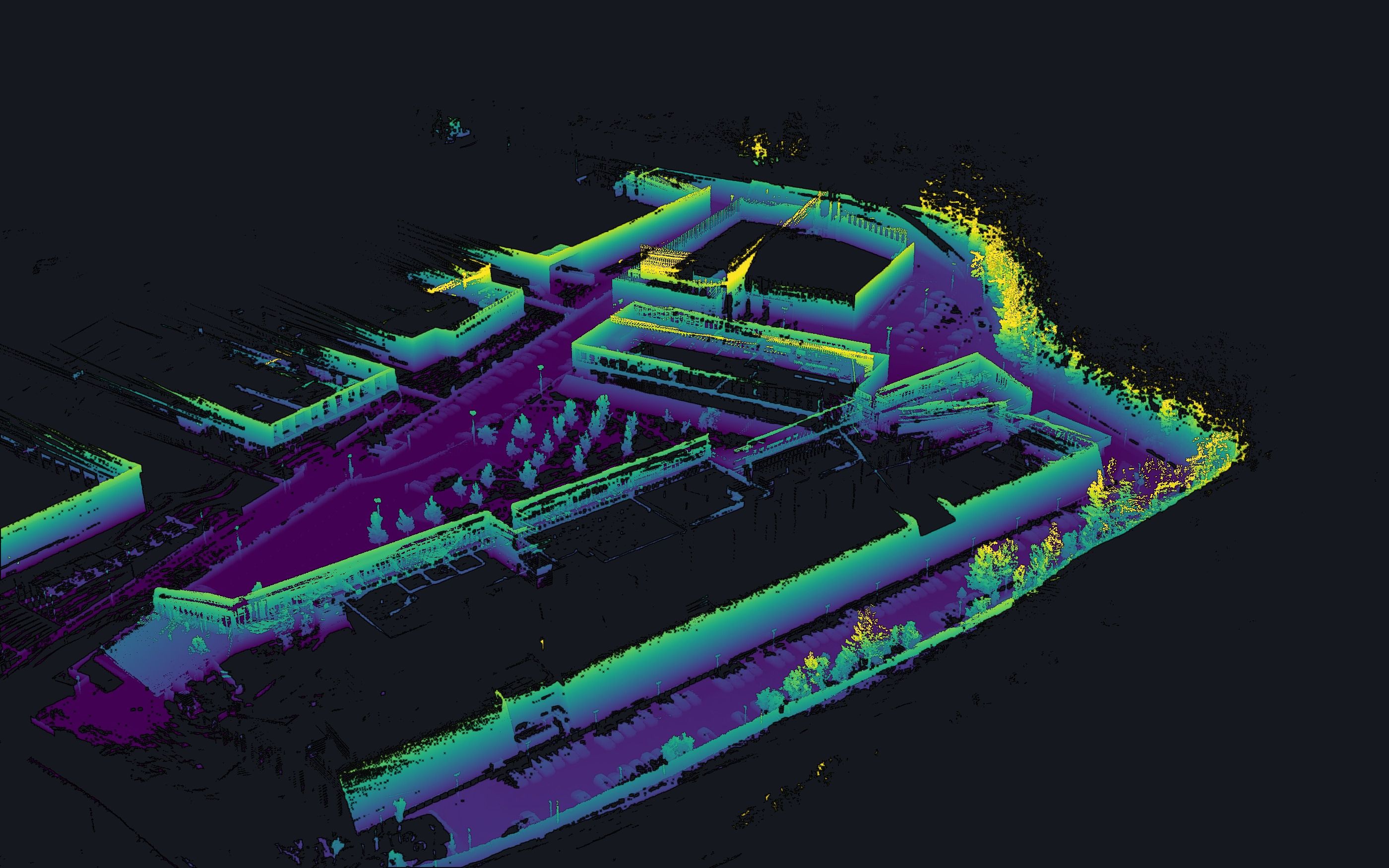
Real LiDAR point cloud of a site seen from above: roads, trees and buildings coloured by height.
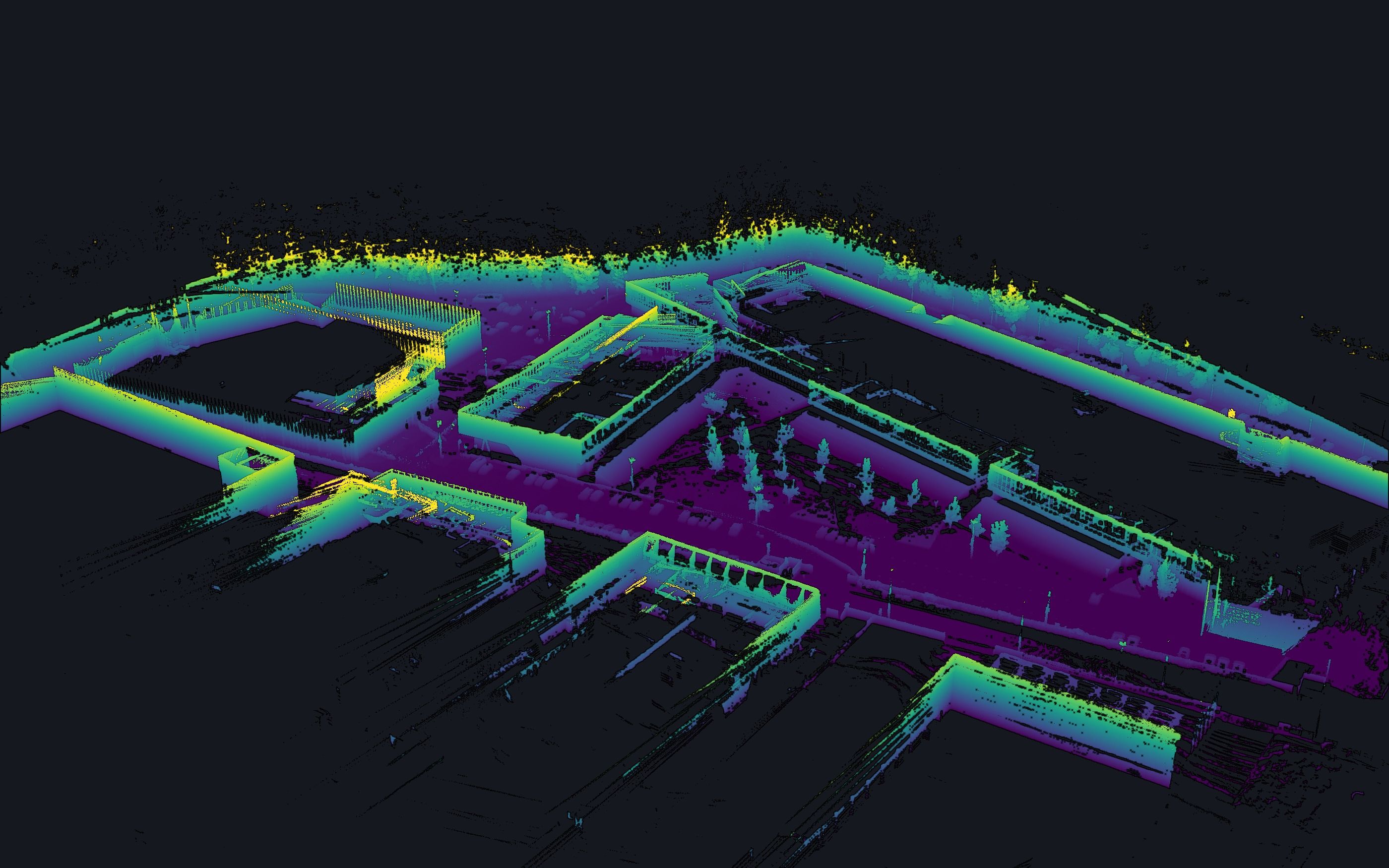
The same site as a real LiDAR point cloud, seen from the west: buildings, a tree-lined yard and roads, coloured by height.
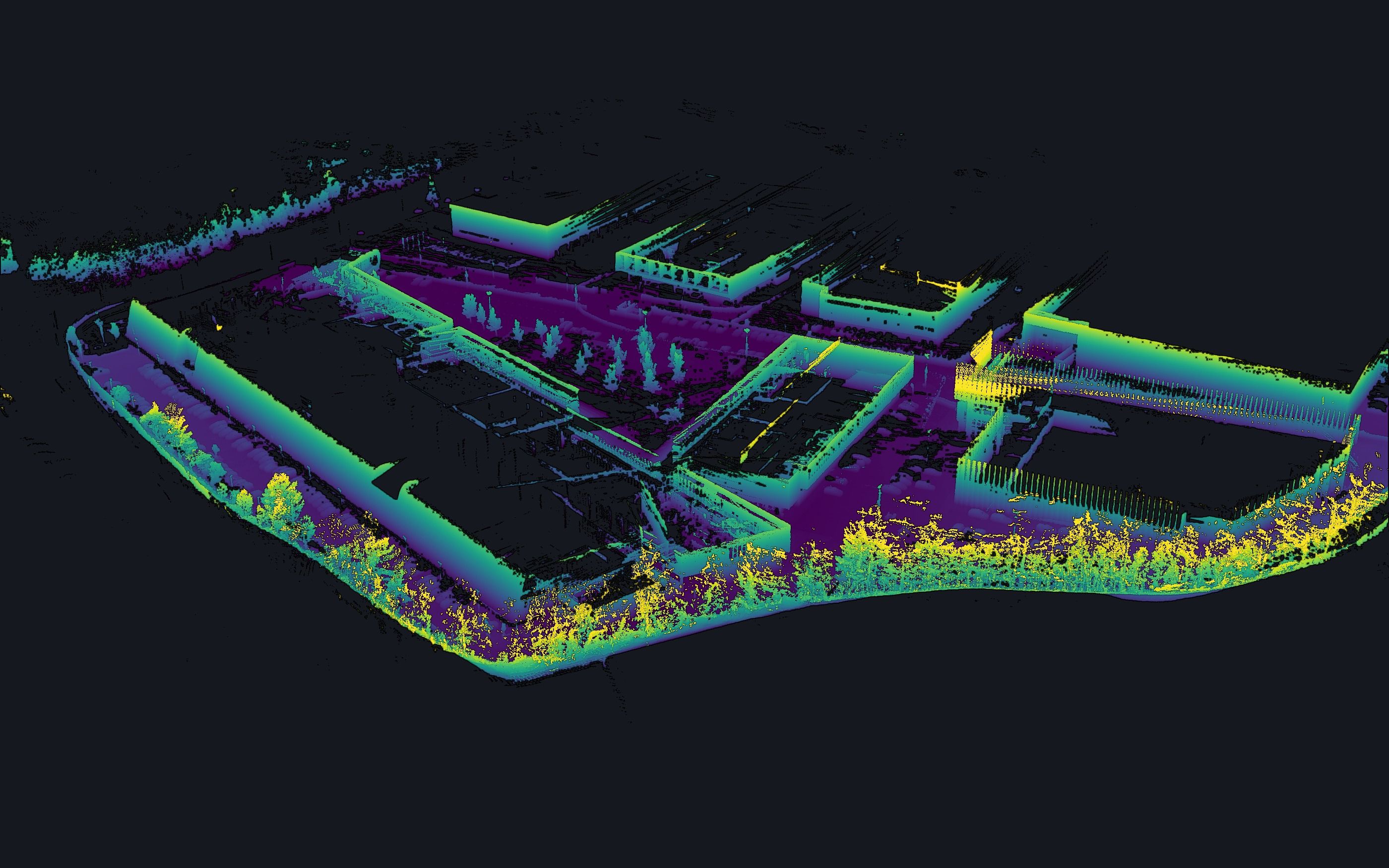
The same site as a real LiDAR point cloud, seen from the north: the tree-lined perimeter and the buildings, coloured by height.
Real point cloud

03Mapping

Your site’s 3D map

The vehicle drives around the site and builds a three-dimensional map from LiDAR point clouds. The scene is created on that map, and the vehicle localises itself on it with centimetre-level precision, combining the LiDAR and the GPS, without relying on GPS alone.

  1. Drives around the site

    The LiDAR captures the surroundings as point clouds.

  2. Builds the 3D map

    The scene is created with it: paths, routes and zones.

  3. Localises itself on it

    LiDAR and GPS together, with centimetre-level precision.

Validation

From simulation to the real world

We test the system first in simulation, then on a closed track and at Teruel Airport, our test site. On your platform we follow the same order.

Real-world test
Real-world test: our vehicle in autonomous mode, with the LiDAR point cloud and detection.
Vehicle
Our vehicle, in autonomous mode
On screen
Cameras and LiDAR point cloud
  1. Simulation

    Diagram

    The same software in simulation and on the real vehicle, with automated scenarios.

  2. Test track

    2025

    50+km

    in autonomous mode, on a closed track

  3. Real world

    2026

    400+km

    in autonomous mode, on our vehicle

Kilometres in autonomous mode. Each stage is counted separately.

Who leads it

SeaX Drive is led by Eugenio Alcalá. PhD from UPC, visiting researcher at UC Berkeley. Led planning and control on RIMAC Automobili’s autonomous driving programme.

Meet the team

05Data sheet

What SeaX Drive brings and what your platform needs

What SeaX Drive brings, and what we work out with you in the technical assessment.

Data sheet · SeaX Drive

Operational design domain

Level 4: it drives without a driver on a closed site, only along the routes on its map.

ValidatedOn our vehicle
EnvironmentTest track and test site
LightDaytime

What SeaX Drive brings

Autonomy
On-board computing
Perception, planning and control on board
Environment
Closed sites with routes defined on the map
Software
Autonomy stack integrated and developed by SeaX AI
Perception and localisation
Sensors
LiDAR, cameras and GPS. Adaptable to different set-ups
Localisation
Centimetre-level, with the LiDAR and the GPS on the site’s 3D map
Safety
In the event of a fault
Two independent detection paths, fault detection, reduced speed and safe stop
Functional safety in detail

What your platform needs

Your platform
Base
Electric chassis with steering, propulsion and braking actuators
Sensors
Set-up agreed with you
Interface, compute and licence
We agree them with you in the technical assessment

For anything not on this sheet: Talk to our engineers

06How we work with a manufacturer

From technical assessment to licence

We adapt it to each manufacturer.

  1. Technical assessment

    We deliver
    How SeaX Drive integrates with your platform.
  2. Integration

    We deliver
    SeaX Drive adapted to your vehicle and sensors.
  3. Pilot

    We deliver
    Validation on your platform, in simulation and on track.
  4. Licence

    We deliver
    The licence for the vehicles you build.
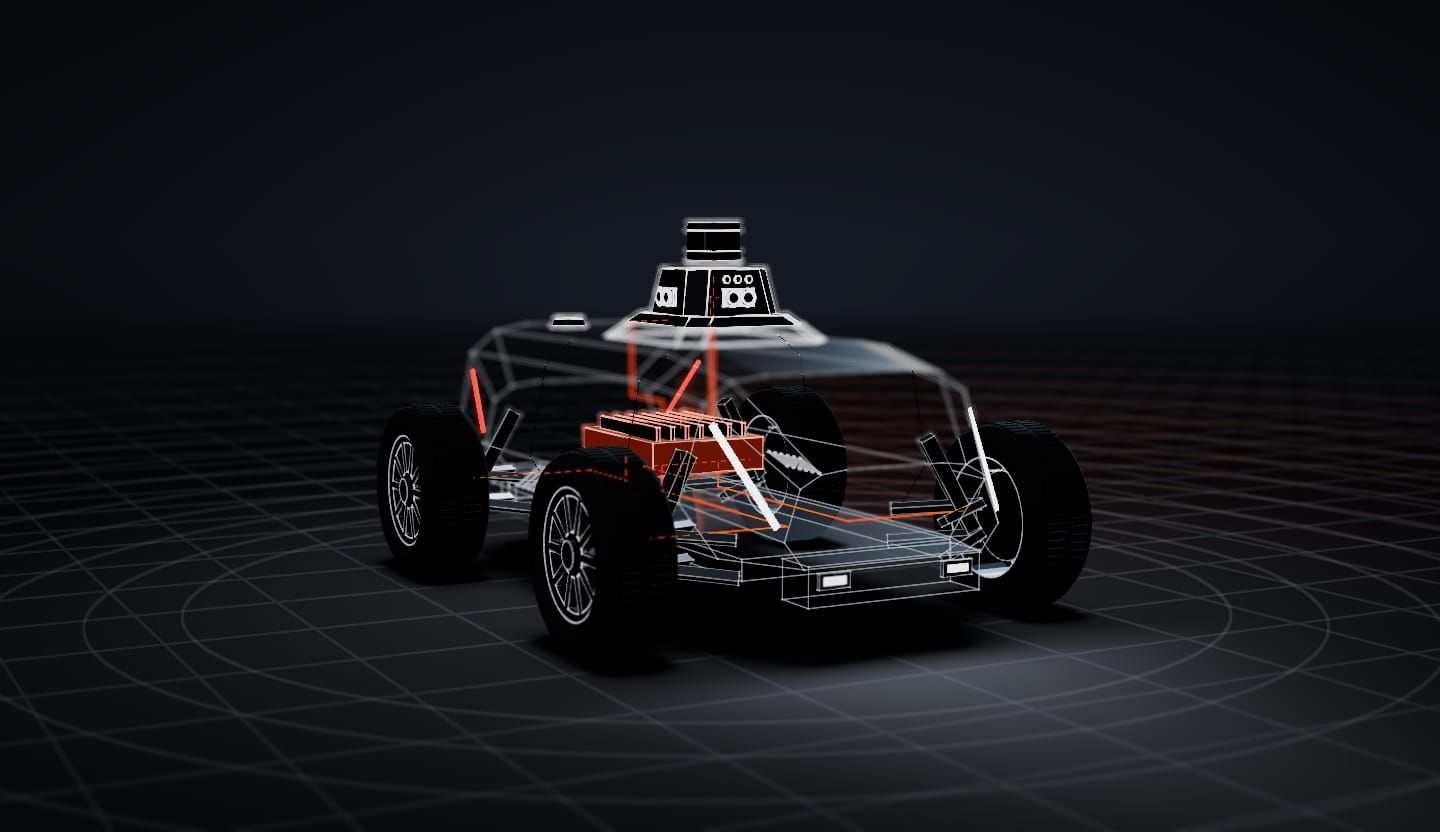
Illustrative 3D model of the vehicle from the front, with a transparent body: sensor data flows to the SeaX Drive on-board computer and from there to the platform’s wheels.
Illustrative model · not to scale
SeaX Drive, on boardYour platform · chassis and actuators

SeaX Drive

Let’s talk about your platform

Tell us which platform you build and what stage the project is at.

Who are you?

Your email app opens with the message ready for [email protected].

Talk to usEmail us